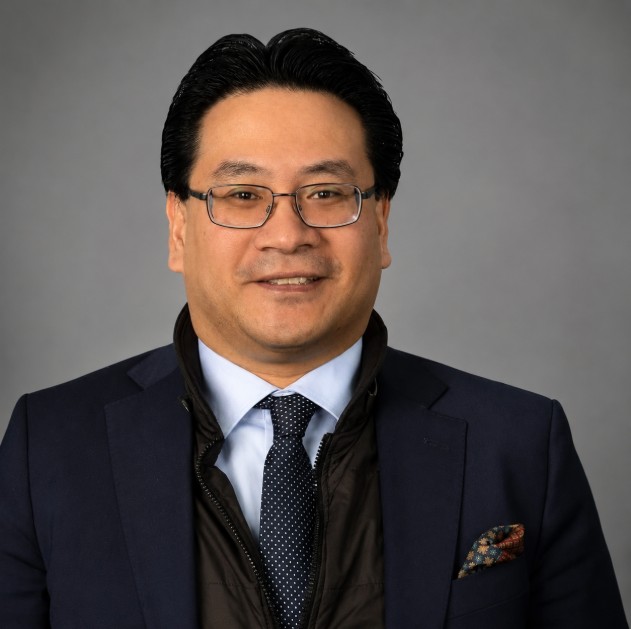
Dr. Glenn Agung Hole is a Norwegian institutional economist, geoeconomic analyst, academic, entrepreneur, and founder of The Institutional Capital Project (www.institutionalcapital.org), an international initiative dedicated to exploring how institutions, entrepreneurship, leadership, trust, and governance contribute to long-term prosperity, resilience, and societal development.
He is the founder and CEO of Procuratio Consulting, a strategic advisory firm working within entrepreneurship, business development, institutional analysis, economic policy, governance, and organisational transformation. Through Procuratio Consulting, he advises businesses, entrepreneurs, investors, and organisations on strategy, growth, institutional development, and long-term value creation.
Dr. Hole currently serves as Associate Professor of Entrepreneurship, Economics and Management at the University of South-Eastern Norway (USN) and holds additional academic appointments within economics, management, sustainability, and digital business transformation. His academic work focuses on institutional economics, entrepreneurship, innovation systems, geoeconomics, institutional resilience, and the relationship between governance structures and economic development.
He holds a Ph.D. in Strategic Management, a Master of Business Administration (MBA), an Advanced Diploma in Management Systems, and a Diploma in Supply Chain Management. All higher education was completed alongside full-time professional responsibilities, reflecting a lifelong commitment to learning, leadership, and professional development.
With more than 28 years of experience across business and academia, Dr. Hole has served as chief executive officer, chairman, strategic adviser, transformation leader, and management consultant across a wide range of industries. His experience spans publicly listed corporations, privately held companies, higher education institutions, and complex transformation and restructuring projects.
His current research and analytical work focus on the concept of Institutional Capital and how societies create, transfer, and reproduce the institutional foundations necessary for entrepreneurship, innovation, economic competitiveness, and societal resilience in an increasingly fragmented and multipolar world.
Dr. Hole regularly contributes analysis and commentary on entrepreneurship, innovation, institutional development, economic competitiveness, geoeconomics, and societal resilience. He is an active participant in international academic, policy, and business networks and works to bridge the gap between research, policy, and practical implementation.
Over the past 28 years, he has worked as a management consultant and interim manager in various companies. All his academic dissertations have been practical and based on business cases from Norwegian companies:
- Doctor of Philosophy in Management; PhD thesis on an independently developed management model, TIPS (Technology, Intellectual capital, Process and Strategy).
- The Master of Business Administration dissertation was written for the Norwegian energy company Statkraft.
- The Advanced Diploma in Management was written for Orkla Media/Edda Media on the business case Nabolaget/Lokal Guiden.
- A Diploma in Supply Chain Management was written for the National School Fruit Organisation.
Originally from Indonesia, he was born in Jakarta, the capital, on 26th February 1977. Shortly after his birth, he was left in an orphanage. In August 1977, Dr. Hole was adopted by a Norwegian couple in Ålesund, a great city on the northwest coast of Norway, at the age of only six months old.
He is married, has two children, and has lived in eastern Norway for 20 years. He has a great interest in haute cuisine and culture. He has travelled in all European countries, many parts of the USA and Canada, and Russia, Georgia, and parts of Asia.
He has always been fascinated by how people do their work. As a young boy, he worked on the family farm and helped his grandfather and father put the pile pole into the ground. His father was driving the tractor in front with the pile pole on the silosvans. He and his grandfather picked the pile pole from the silosvans and put it in the ground. By working together with the same goal, they worked much more quickly than they would have worked individually.
The same lesson is transferable to any organisation. Dr. Hole learned early in his childhood that by binding people, processes and technology together, one could improve efficiency in the work. In the aforementioned story, he learned to work together towards the same goal and use technology; in this case, a tractor represented the technology, and they worked faster than using a wheelbarrow. This was the start of the business process improvement career of Dr. Hole.
He started his career in 1995 as a group manager in the electrical department of a supermarket. For the last 15 years, he has worked on business process improvements and on binding people, processes, and technology to secure competitive advantages for organisations. The three factors, people, process and technology, are also the precursors to the TIPS model. The TIPS model is a way of binding Technology, Intellectual Capital (people), process, and strategy together.
He has experience as a chairman and board member of several boards of directors, as well as in senior executive positions. He is used to working with institutional and private investors. Most of his work experience has been through management for hire, project positions, etc.