An Unexpected Honour from the Ecumenical Patriarch of Constantinople
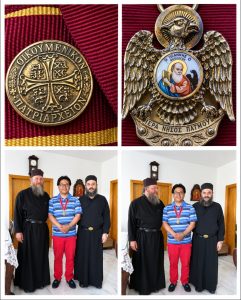
In July 2014, during a private family holiday on the Greek island of Patmos, Dr. Glenn Agung Hole received an unexpected telephone call requesting his presence at the Holy, Royal and Patriarchal Monastery of Saint John the Theologian. No explanation accompanied the invitation.
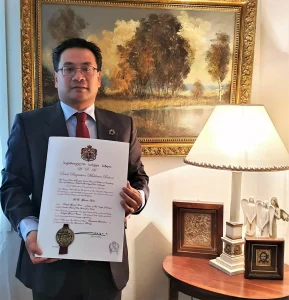
As the accompanying photographs clearly illustrate, he arrived wearing ordinary holiday clothing. Neither he nor his family anticipated any formal ceremony or official recognition, as the visit to Patmos was intended solely as a private family holiday to one of Christianity’s most significant historical and spiritual sites.
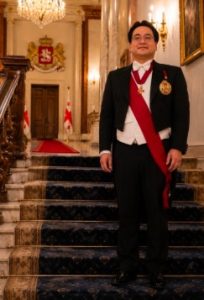
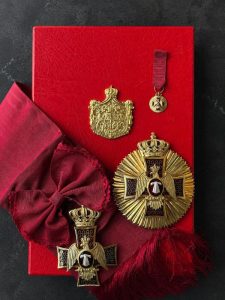
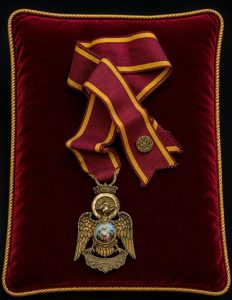
Upon his arrival, he was received by an Orthodox priest and the Monastery’s legal counsel. Acting on behalf of His All-Holiness Bartholomew I, Ecumenical Patriarch of Constantinople, they presented Dr. Hole with the Medal of the Ecumenical Patriarchate – Holy Monastery of Saint John the Theologian.
The distinction, conferred by the Ecumenical Patriarch of Constantinople, recognised his contribution to promoting dialogue and strengthening cooperation between the Greek Orthodox Church, the Georgian Orthodox Church, the Roman Catholic Church, and the Church of Norway.
Founded in 1088, the Monastery of Saint John the Theologian is directly subordinate to the Ecumenical Patriarchate of Constantinople and is recognised as one of the most important spiritual centres of Eastern Orthodoxy. Together with the Cave of the Apocalypse and the historic town of Chora, it forms part of the UNESCO World Heritage Site on Patmos.
Throughout his engagement with different Christian traditions, Dr. Hole has consistently regarded dialogue as an expression of institutional responsibility rather than personal ambition. As a lifelong member of the Church of Norway, he pursued his work across Christian traditions with a commitment to mutual respect, trust, and cooperation, rather than the pursuit of ecclesiastical honours or public recognition.
From an institutional theory perspective, the distinction highlights the importance of institutional capital. Durable institutions are sustained not only by governance structures, legal authority, or formal hierarchy, but also by trust, credibility, reciprocity, and long-term relationships cultivated across institutional boundaries. These intangible assets constitute a fundamental source of institutional resilience and legitimacy.
The award, therefore, represents more than an individual distinction. As a gift and recognition from the Ecumenical Patriarch of Constantinople, it reflects the value placed on dialogue, bridge-building, and constructive cooperation between Christian traditions. More broadly, it illustrates that enduring institutions—whether churches, universities, governments, or civil society organisations—ultimately depend upon individuals who invest in trust, strengthen relationships, and contribute to the accumulation of institutional capital across organisational, cultural, and theological boundaries.